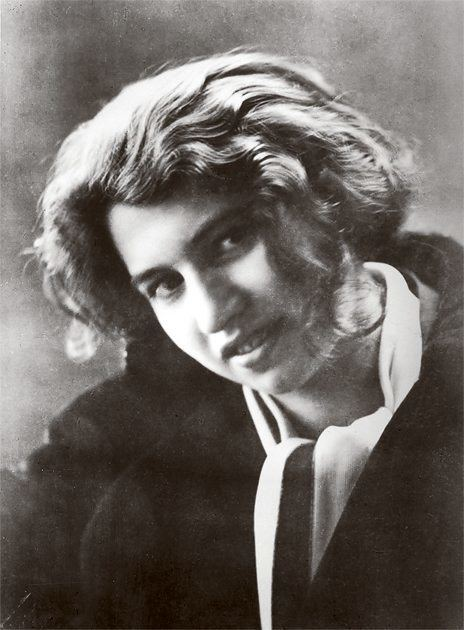
Dora Diamant: Franz Kafka's Final Love and Literary Guardian
In the annals of literary history, few figures are as enigmatic and profoundly impactful, yet often overshadowed, as Dora Diamant. Born Dwojra Fünn on March 4, 1898, in the industrial town of Pabianice, Congress Poland, Diamant would become the final, most intimate companion and caregiver to the celebrated author Franz Kafka. Her story is one of radical transformation, unwavering loyalty, and remarkable resilience, stretching from the cloistered world of Hasidic Judaism to the vibrant, tumultuous political and artistic scenes of early 20th-century Europe. More than just a romantic interest, Diamant played a crucial role in Kafka's final year, offering him unprecedented domestic stability and becoming an inadvertent custodian of his literary legacy, even as circumstances led to the tragic loss of some of his most personal writings.
A Life Forged in Contradictions: From Hasidic Roots to Bohemian Spirit
Dora Diamant's early life was a stark contrast to the independent, avant-garde woman she would become. Her family adhered to strict Hasidic Judaism, a devotional path that emphasized spiritual observance and communal insularity. Her father, Herschel Dymant, was a devout follower and a small-scale businessman, likely involved in textiles or trade, navigating the economic pressures faced by Jewish communities in partitioned Poland. Much of her childhood unfolded in Będzin, a mining-adjacent town in Upper Silesia, where the family's Orthodox environment deeply immersed her in Yiddish culture and traditional practices.
However, from a young age, Diamant displayed an independent spirit that chafed against the confines of religious orthodoxy. Around 1912, at the tender age of 14, the death of her mother thrust significant caregiving responsibilities upon her, as she was tasked with looking after her numerous siblings, reportedly up to ten. This demanding upbringing, while rooted in piety, also instilled in her a deep sense of duty and practical self-reliance. Yet, the call of a different life proved stronger. Rejecting the preordained path, Dora eloped, embracing Zionist ideals and, critically, pursuing her passion for the stage. This radical departure led her to join a Yiddish theater troupe, a decision that not only allowed her to explore artistic ambitions but also brought her into contact with a broader world of ideas and political engagement.
The Unlikely Encounter: Dora Diamant and Franz Kafka
The summer of 1923 marked the pivotal moment when the paths of Dora Diamant and Franz Kafka converged. On July 13, she met Kafka at a Jewish workers' holiday camp near Graal-Müritz on the Baltic Sea, where she was working as a cook. Kafka, already suffering from the debilitating effects of laryngeal tuberculosis, was drawn to her vibrant energy, intellect, and profound authenticity. For Dora, Kafka represented a kindred spirit, a man whose depth resonated with her own complex interior world.
Their relationship developed with astonishing speed and intensity. Kafka, yearning for a sense of domesticity and peace that had eluded him for much of his life, made a courageous decision. Defying his family's wishes and the societal expectations of his time, he moved to Berlin to live with Dora Diamant. This arrangement offered him a rare sanctuary of stability and affection during his final, rapidly deteriorating months. Diamant nursed him with unwavering devotion, providing not just physical care but also emotional solace. It was during this period that Kafka, often burdened by self-doubt, found a renewed sense of purpose and, arguably, the closest he ever came to personal happiness.
One of the most profound and contentious aspects of Dora Diamant's connection to Kafka concerns his literary legacy. At his request, she tragically burned some of his unpublished writings, a testament to his persistent desire to have certain works destroyed. Yet, crucially, she also safeguarded others, including approximately 20 notebooks and numerous letters. These invaluable documents, which Diamant later claimed detailed his intensive Yiddish studies and personal reflections, would become the subject of a decades-long mystery. For a deeper dive into this fascinating literary puzzle, you can explore Dora Diamant and the Mystery of Kafka's Lost Writings.
A Legacy of Loyalty and Activism: Beyond Kafka's Shadow
Following Kafka's death on June 3, 1924, Dora Diamant did not retreat into obscurity. Instead, she immersed herself in promoting his work among Jewish audiences, believing in the power of his words. Her life continued to be one of passionate commitment and significant struggle. She pursued her theatrical ambitions, studying acting at the Düsseldorf Playhouse Academy and performing in agitprop theater, a form of political theater aimed at spreading communist ideals. Her alignment with communist causes in Berlin grew stronger, reflecting her unwavering dedication to social justice.
This political engagement, however, drew the ominous scrutiny of the Gestapo. In 1933, a pivotal and devastating event occurred: the Nazi secret police raided her Berlin apartment, seizing Kafka's invaluable manuscripts. This act of state-sanctioned theft deprived the world of potentially crucial insights into Kafka's mind and work, and the papers' contents remain a point of intense literary and historical contention to this day.
Fleeing the escalating persecution, Diamant briefly sought refuge in the Soviet Union before managing to escape to Britain in 1936. Her struggles, however, were far from over. During World War II, she endured the indignity of wartime internment as an "enemy alien," a painful irony for someone who had fiercely resisted totalitarianism. In Britain, she also raised her daughter, ensuring her survival and well-being amidst global upheaval. Dora Diamant dedicated her later years to Yiddish education and community work in London's East End, continuing to serve a community she cherished, until her own death from tuberculosis on August 15, 1952 – the same disease that claimed Kafka. Her tumultuous life, marked by political activism, personal sacrifice, and extraordinary resilience, is further explored in Beyond Kafka: The Tumultuous Life of Dora Diamant.
The lost Kafka papers, though partially rediscovered in East German archives by scholars in the 1980s, remain a tantalizing mystery. Diamant's accounts of their contents, while invaluable, continue to be debated due to the absence of independent verification beyond her testimony. Her story serves as a potent reminder of the fragility of artistic legacies in times of political turmoil and the profound impact individuals can have on shaping, and sometimes inadvertently altering, the historical record.
Dora Diamant was far more than just Franz Kafka's final love; she was a woman of fierce independence, profound compassion, and unwavering conviction. From her rebellion against a traditional upbringing to her tireless activism and guardianship of a literary giant's legacy, her life speaks to the power of personal choice and resilience in the face of immense adversity. She offered Kafka solace and stability in his dying days and, through her actions and sacrifices, played an undeniable, albeit complex, role in the preservation and understanding of his immortal work. Her journey underscores how personal relationships can intersect with monumental literary history, shaping narratives and mysteries that endure for generations.